Why onchain subscription saas strategy matters now
The traditional SaaS billing model is built on friction. You rely on centralized payment processors that gate access to global markets, impose steep cross-border fees, and require manual reconciliation for every failed transaction. An onchain subscription saas strategy removes these intermediaries, replacing them with a transparent, automated ledger that operates 24/7.
For global teams, this shift is not just about cost savings; it is about accessibility. By accepting stablecoins or native tokens directly, you eliminate the currency conversion hurdles that often deter international users. Stripe’s guide on on-chain crypto practice notes that businesses can simplify payments and minimize friction by moving away from legacy banking rails. This means your SaaS product becomes instantly available to anyone with a wallet, regardless of their geographic location or banking infrastructure.
Automation is the second pillar of this strategy. Once you define subscription plans on-chain and collect scoped authorization, renewals happen automatically via smart contracts. This idempotent process reduces the administrative burden of chasing down late payments or managing subscription cancellations. Instead of relying on third-party billing platforms that may charge per-transaction fees or hold your funds, you retain control over your revenue stream.
While the technology requires a learning curve, the strategic imperative is clear. As crypto adoption grows among developers and tech-forward users, offering onchain subscription options positions your SaaS as a modern, borderless service. It aligns your revenue model with the infrastructure of the future, reducing reliance on legacy financial systems that are increasingly ill-suited for the digital economy.
Core infrastructure for recurring crypto payments
Building an onchain subscription SaaS strategy requires moving beyond simple wallet-to-wallet transfers. You need a system that treats recurring billing with the same rigor as traditional fintech, but leverages blockchain's transparency and programmability. The foundation rests on three technical pillars: a precise ledger definition, scoped authorization, and idempotent renewal logic.
Define the ledger structure
Before writing any code, you must define how subscription plans exist on-chain. Unlike a database row in a SQL table, on-chain state must be immutable and verifiable. Use a ledger or token standard that supports recurring fee structures. This ledger acts as the source of truth for who owes what and when. Clear metadata for plan tiers (e.g., Basic, Pro, Enterprise) ensures that the smart contract can automatically enforce access levels based on payment status. Without a well-defined ledger, reconciliation becomes a manual nightmare, defeating the purpose of automation.
Implement scoped authorization
Collecting payment is only half the battle; you need secure, revocable access to execute it. Onchain subscriptions rely on authorization scopes rather than handing over full wallet control. Use ERC-20 allowances or ERC-721/1155 permit signatures to grant your SaaS platform permission to pull specific amounts at defined intervals. This scoped approach minimizes risk. If a user decides to cancel, they can revoke the permission instantly. If your platform is compromised, the damage is limited to the authorized scope. Always enforce strict validation on the amount and frequency of these authorized pulls to prevent drift or abuse.
Automate with idempotent logic
The final piece is the renewal engine. On-chain transactions can fail due to network congestion, gas spikes, or insufficient funds. Your renewal logic must be idempotent, meaning that executing the same renewal command multiple times should not result in double-charging or duplicate subscription periods. Implement a state machine that tracks the last successful renewal timestamp and amount. If a transaction fails, the system should queue a retry with exponential backoff, but it must check the ledger state before attempting to charge again. This ensures that your recurring revenue stream remains stable even in volatile network conditions.
Comparing onchain vs traditional billing models
Building an onchain subscription SaaS strategy requires understanding where traditional billing falls short and how blockchain infrastructure fills those gaps. The choice isn't just about technology; it's about how you handle revenue, trust, and global accessibility.
Traditional SaaS billing relies on centralized payment gateways like Stripe or PayPal. While reliable, these systems introduce friction: high processing fees (often 2.9% + $0.30 per transaction), currency conversion costs, and geographic restrictions that can block customers in emerging markets. Additionally, payment failures due to expired cards or insufficient funds require manual intervention or automated dunning processes that often fail, leading to churn.
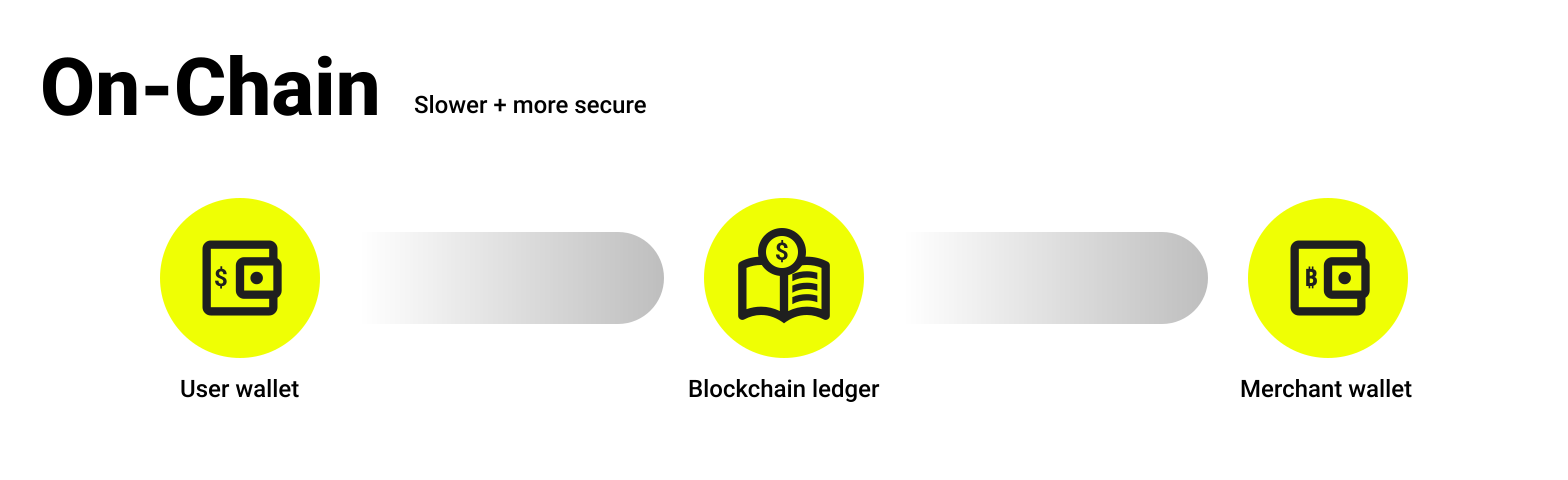
Onchain subscription infrastructure removes these intermediaries. By using smart contracts to manage recurring payments, you automate the billing lifecycle directly on the blockchain. This approach offers near-zero transaction fees for stablecoin payments, instant settlement, and global accessibility without currency conversion barriers. However, it introduces complexity: users must hold crypto, manage gas fees, and navigate wallet signatures, which can create a steeper initial learning curve.
The table below breaks down the core tradeoffs between these two models to help you decide which fits your business goals.
| Feature | Traditional SaaS Billing | Onchain Subscription Infrastructure |
|---|---|---|
| Cost | 2.9% + $0.30 per transaction | Near-zero for stablecoins; gas fees vary |
| Transparency | Opaque; dependent on gateway reports | Public ledger; verifiable in real-time |
| Automation | Manual dunning for failed payments | Smart contract auto-renewal or pause |
| Global Reach | Restricted by banking corridors | Borderless; accessible to anyone with a wallet |
| User Experience | Familiar credit card flow | Requires crypto wallet management |
For teams new to this space, the initial setup may feel more complex than signing up for a payment processor. But for businesses prioritizing transparency and global reach, the long-term benefits of an onchain subscription SaaS strategy often outweigh the early adoption hurdles.


As an Amazon Associate, we may earn from qualifying purchases.
Analyzing Revenue Sustainability and Pricing
Building an onchain subscription SaaS strategy requires more than just deploying a smart contract; it demands a rigorous approach to unit economics and cash flow stability. Traditional SaaS metrics like MRR and churn still apply, but the onchain environment introduces unique variables that can either stabilize or destabilize your revenue streams. The primary advantage lies in the transparency and automation of billing, which reduces administrative friction and builds trust with users who value financial sovereignty.
Stablecoin Billing and Volatility Risk
One of the most critical decisions in your onchain subscription SaaS strategy is the choice of payment currency. While Bitcoin and Ethereum are popular, they are volatile assets that pose significant risks for recurring revenue models. If you bill in ETH, a sudden market downturn can drastically reduce your realized revenue before you even convert it to fiat or stablecoins. This volatility makes financial planning difficult and can erode margins quickly.
Using stablecoins like USDC or USDT mitigates this risk by pegging the subscription price to a stable value. However, this introduces the need for reliable oracle data and efficient conversion mechanisms if you need to pay operational costs in fiat. The cost of gas fees for each recurring payment must also be factored into the pricing model, as micro-transactions can become prohibitively expensive on mainnets like Ethereum. Layer 2 solutions or alternative L1s with low fees are often essential for making small-ticket subscriptions viable.
Reducing Churn Through Transparency
Churn is the silent killer of any subscription business. In the onchain world, you can leverage transparency to reduce churn. By providing users with clear, immutable records of their subscription status, payment history, and service entitlements, you build a level of trust that traditional SaaS platforms struggle to match. Users can verify on-chain that their payments are being processed correctly and that their access rights are enforced automatically.
Also, onchain mechanisms allow for more flexible pricing models. Instead of rigid monthly plans, you can implement usage-based billing or hybrid models that adjust dynamically. This flexibility can help retain customers who might otherwise churn due to rigid pricing structures. The key is to ensure that the user experience remains simple, even if the underlying smart contract logic is complex.
Retry Mechanisms and Failed Payments
In traditional SaaS, failed payments are handled by automated retry systems. Onchain, this is more nuanced. Since transactions are irreversible, a failed transaction usually means the user needs to initiate a new payment. This can lead to friction and potential churn if the process is not seamless. Implementing automated retry mechanisms that monitor the mempool and suggest optimal gas fees can help reduce failure rates.
Additionally, consider implementing a grace period where users can rectify failed payments without losing access immediately. This gives users time to address wallet issues or liquidity problems without disrupting their service. Clear communication about these processes is essential to maintaining a positive user experience and minimizing unexpected interruptions in service.
Launch checklist for onchain subscription SaaS strategy
Building a recurring revenue model on-chain requires moving beyond simple one-time payments. You need a system that handles authorization, automated renewals, and compliance without manual intervention. This checklist walks you through the essential steps to launch your onchain subscription SaaS strategy securely and efficiently.
Start by structuring your tiers. Whether it’s monthly access or annual enterprise licenses, define these clearly in your ledger. This ensures that your backend knows exactly what entitlements each user holds before any payment is processed.

Instead of asking users to send funds manually every period, implement a token approval flow. Users sign a transaction granting your contract permission to pull a specific amount up to a limit. This is the foundation of frictionless recurring billing in crypto.
Set up a cron job or chainlink automation to trigger renewals. Crucially, use idempotent operations to prevent duplicate charges if a transaction fails and retries. This protects your users from billing errors and maintains trust in your platform.
Crypto transactions are taxable events in many jurisdictions. Integrate tools that track the fiat value at the moment of each subscription charge. This data is vital for generating accurate tax reports and ensuring your onchain subscription SaaS strategy remains compliant with local regulations.
By following these steps, you create a robust infrastructure for recurring revenue. The goal is to make the subscription feel as seamless as a traditional SaaS while leveraging the transparency and efficiency of blockchain technology.
Common questions about onchain billing
Many founders confuse the general SaaS subscription model with the specific mechanics of an onchain subscription saas strategy. While traditional subscriptions rely on recurring credit card charges, onchain billing uses smart contracts to automate renewals and manage access rights directly on the blockchain. This distinction matters for transparency and global accessibility.
No comments yet. Be the first to share your thoughts!