Why onchain subscriptions matter now
Traditional SaaS billing relies on legacy fiat rails that clash with the borderless nature of modern software. When a customer in Brazil buys a tool from a founder in Berlin, the transaction becomes an international wire transfer subject to correspondent banking fees, multi-day settlement times, and currency conversion friction. For global SaaS companies, these frictions erode margins and create significant barriers to entry for users in emerging markets.
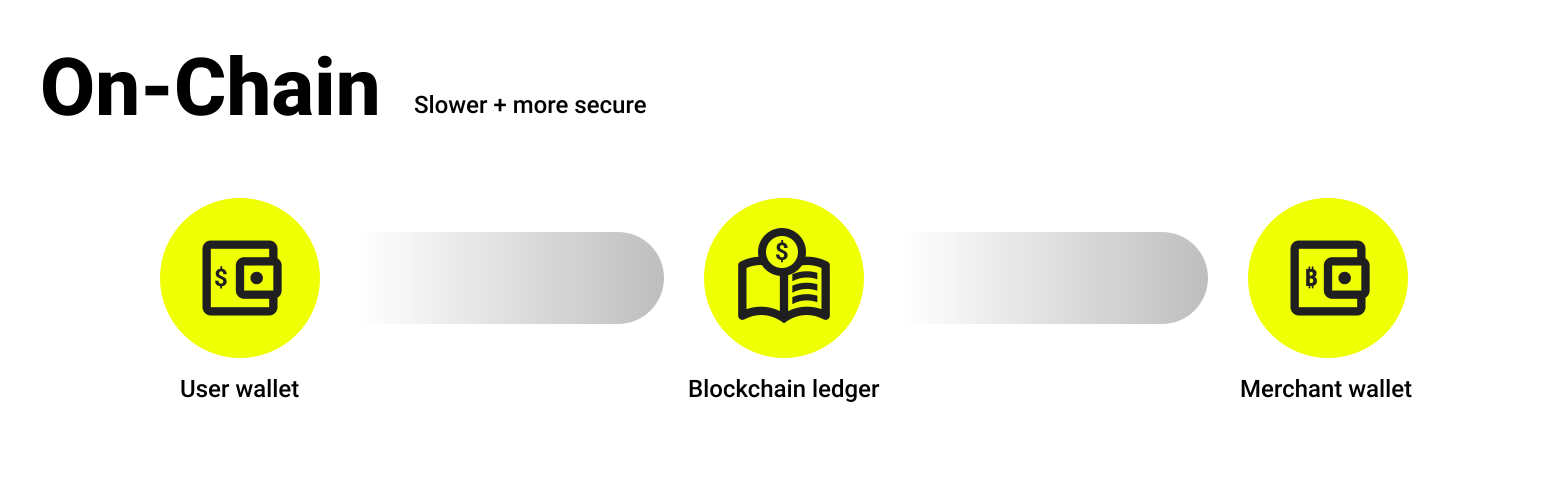
On-chain subscriptions solve this by moving money directly between digital wallets. As defined by payment infrastructure providers, on-chain systems verify and settle transactions on a blockchain network without third-party intermediaries. This architecture removes the need for traditional clearinghouses, allowing SaaS businesses to simplify payments and minimize friction for a truly global user base.
Stripe notes that on-chain crypto allows businesses to improve transparency and streamline the payment process. By leveraging blockchain technology, SaaS platforms can offer instant settlement and lower transaction costs, making it viable to serve customers regardless of their local banking infrastructure.
The economic impact of this shift is visible in the broader market. As adoption grows, the liquidity and stability of digital assets become increasingly relevant to SaaS revenue models. Understanding the market dynamics of these assets helps founders make informed decisions about treasury management and pricing strategies.
Core Infrastructure for Recurring Crypto Billing
Building a reliable onchain subscription system requires a stack that handles volatility, reliability, and automation. For SaaS founders, the goal is to make crypto payments feel as frictionless as credit card processing while retaining the benefits of onchain settlement. This involves integrating smart contracts for logic, oracles for price stability, and payment gateways for user experience.
Smart Contracts and Automated Billing
At the heart of any onchain subscription is a smart contract that manages access and recurring payments. Unlike traditional SaaS, where a database tracks license keys, onchain systems use token ownership or onchain state to grant access. Contracts must define the subscription tier, payment interval, and currency, including logic for handling failed payments such as retry mechanisms.
Oracles for Stablecoin Pricing
Crypto volatility is the biggest hurdle for recurring billing. If you bill in ETH, the value of your subscription could swing significantly between billing cycles. To mitigate this, you need oracles to provide real-time price feeds, allowing you to bill in stablecoins or adjust the amount of native tokens required based on current market rates.
Oracles bridge the gap between offchain market data and onchain contracts. By using a trusted oracle network, you can ensure that the price used for billing is accurate and tamper-proof, which is crucial for maintaining predictable revenue streams.
Payment Gateways and User Experience
Payment gateways abstract away the complexity of wallet connections and transaction signing. They provide a familiar UI for users to pay with crypto, supporting multiple wallets and tokens. These gateways also handle the technical heavy lifting of transaction monitoring and confirmation, allowing developers to focus on the core SaaS product.

Monitoring and Reliability
Robust monitoring is essential to ensure your billing system is always running. This includes tracking transaction success rates, oracle latency, and contract events. Automated alerts help you respond to issues before they impact your customers. Reliability is key to building trust; if payments fail or access is revoked incorrectly, it can damage your reputation.
Stablecoins vs. Native Tokens for SaaS Billing
Choosing between stablecoins and native tokens for your onchain SaaS model is a fundamental choice about who you are serving. Stablecoins offer the predictability of traditional fiat, making them ideal for B2B contracts and enterprise clients who need accounting clarity. Native tokens, however, align incentives with your community, turning customers into stakeholders.
Revenue Predictability and Volatility
Stablecoins like USDC peg their value to fiat currencies, shielding your revenue from the wild swings of the crypto market. This stability simplifies financial planning and allows you to forecast MRR with the same confidence as Stripe or PayPal. Native tokens introduce volatility risk; a $100 subscription could be worth $80 or $120 by the time you convert it to fiat, complicating cash flow management unless you have robust hedging strategies.
User Adoption and Friction
For most B2B buyers, familiarity wins. Stablecoins are widely recognized and accepted, reducing the learning curve for new users. Native tokens require users to acquire and manage a specific asset, which can create friction in the onboarding process. However, for consumer-facing or developer-focused tools, holding your native token can provide access to discounts or governance rights, driving deeper engagement.
Accounting and Compliance Complexity
Stablecoin transactions are generally treated similarly to fiat payments in many jurisdictions, simplifying tax reporting and bookkeeping. Native token transactions can trigger taxable events upon receipt, requiring more sophisticated accounting tools to track cost basis and fair market value at the time of each payment. This added complexity can be a barrier for smaller teams without dedicated crypto accounting resources.
| Feature | Stablecoin Model (e.g., USDC) | Native Token Model | Volatility Risk | User Onboarding Friction | Accounting Complexity | Revenue Predictability |
|---|---|---|---|---|---|---|
| Stablecoin | High | Low | Low | Low | Low | High |
| Native Token | Low | High | High | High | High | Low |
When to Choose Which
If your primary goal is steady, scalable revenue with minimal operational overhead, stablecoins are the safer bet. They integrate smoothly with existing financial infrastructure and appeal to a broader audience. If you are building a community-driven protocol or a token-gated application, a native token model can create powerful network effects, but you must be prepared to manage the associated volatility and compliance burdens.
| Feature | Stablecoin | Native Token |
|---|---|---|
| Volatility | Low | High |
| Adoption Friction | Low | High |
| Accounting | Simple | Complex |
| Incentive Alignment | Low | High |
Navigating Regulatory Compliance and Tax Implications
Accepting cryptocurrency for SaaS subscriptions introduces legal complexity beyond standard payment processing. Unlike traditional fiat transactions, on-chain payments require navigating a fragmented landscape of anti-money laundering (AML) rules, know-your-customer (KYC) mandates, and complex tax reporting obligations. For SaaS founders, treating crypto as "just another currency" is a high-stakes mistake.
KYC and AML Requirements
When you accept crypto, you often become a Money Services Business (MSB) under the Bank Secrecy Act in the United States, or face similar obligations under the EU’s Markets in Crypto-Assets (MiCA) regulation. This means you must verify the identity of your customers before processing their payments. Most SaaS providers handle this by integrating with licensed crypto payment processors who perform the KYC checks. However, if you hold the funds in your own wallet, you bear the direct responsibility for compliance. Stripe’s guide to on-chain crypto emphasizes that simplifying payments shouldn’t come at the cost of regulatory safety.
Tax Reporting and Accounting
Tax authorities worldwide are tightening their grip on crypto transactions. In the U.S., the IRS treats cryptocurrency as property, not currency. This means every subscription payment triggers a taxable event: you must calculate the fair market value of the crypto at the exact moment of receipt and track the cost basis if you later convert it to fiat. For international SaaS companies, this complexity multiplies, requiring accounting for VAT, GST, or digital services taxes in multiple jurisdictions.
Stablecoins and Market Context
Many SaaS companies mitigate volatility risk by accepting stablecoins like USDC or USDT. While these assets reduce price fluctuation, they do not exempt you from regulatory or tax duties. Understanding the current market dynamics of these assets is crucial for accurate financial forecasting and compliance reporting.
Implementation checklist for SaaS founders
Launching onchain subscriptions requires more than just adding a wallet address to your checkout. It demands a robust infrastructure that handles recurring billing, stablecoin volatility, and regulatory compliance. This checklist ensures your technical and legal foundations are solid before you go live.
Unlike one-time crypto payments, subscriptions require a provider that supports automated recurring transactions. Gateways like 0xProcessing or Weavr offer APIs designed specifically for SaaS models, handling stablecoin conversions and retry logic for failed transactions. Choose a provider that integrates with your existing stack rather than building a custom smart contract for billing.
Volatility is the enemy of recurring revenue. Configure your gateway to settle primarily in stablecoins like USDC or USDT. This ensures that the value your customer pays today matches the value you receive, protecting your margins from market swings. Ensure your treasury wallet is set up to receive these specific assets efficiently.
Even subscription-based crypto payments trigger regulatory obligations. Integrate Know Your Customer (KYC) checks early in the onboarding process if your gateway requires it. Consult legal counsel to ensure your terms of service align with local regulations regarding digital asset services, particularly if you operate across borders.
Before launching, simulate the entire customer journey: signup, first payment, subscription renewal, and cancellation. Test edge cases like insufficient funds or wallet address changes. Ensure your customer support team is trained to handle common onchain payment issues, such as transaction delays or failed blockchain confirmations.
Once live, track key metrics like subscription churn, payment success rates, and gas fee impacts. Use these insights to refine your pricing tiers and communication strategies. Regularly review your provider’s security updates and compliance requirements to maintain a secure and trustworthy subscription service.
Implementation considerations for SaaS founders
Beyond the technical checklist, founders must consider the long-term implications of onchain billing. This includes selecting the right blockchain network for cost efficiency, managing treasury liquidity, and ensuring customer support can handle crypto-specific issues.
Network Selection and Gas Fees
The choice of blockchain significantly impacts user experience and costs. Ethereum mainnet offers security but high gas fees, which can be prohibitive for small subscriptions. Layer 2 solutions like Arbitrum or Optimism, or alternative chains like Solana, offer lower fees and faster finality. Choose a network that aligns with your target audience's preferences and your cost structure.
Treasury Management
Receiving crypto creates treasury management challenges. You must decide whether to hold assets, convert them to fiat, or use them for operational expenses. Automated conversion tools can help mitigate volatility risk, but they may incur additional fees. Establish clear policies for treasury management to ensure financial stability.
Customer Support
Crypto payments introduce new support scenarios, such as failed transactions due to insufficient gas or incorrect wallet addresses. Train your support team to handle these issues efficiently. Provide clear documentation and FAQs to help users troubleshoot common problems independently.
Frequently asked questions about onchain billing
Onchain billing sits at the intersection of traditional SaaS infrastructure and decentralized finance. For founders and developers, understanding the mechanics of on-chain payments and subscription architecture is essential for building compliant, scalable products.
These considerations highlight the shift from traditional payment processors to onchain alternatives. While the core value proposition remains access to software, the underlying mechanics change significantly when moving to decentralized infrastructure.
No comments yet. Be the first to share your thoughts!